
Teeth Whitening Services
A careful, clearly explained approach for different staining patterns, lifestyles and sensitivity needs.
Teeth Whitening is most useful when it is treated as an individual service rather than a standard promise of brighter teeth. The starting shade, cause of discolouration, current oral health, previous sensitivity, visible dental work and daily habits all affect what can be done responsibly. This page brings those considerations together so that the service can be understood from assessment through aftercare.

The reference material focuses on young adults, tea and coffee drinkers, and people who are concerned about sensitive teeth. Each group may arrive with different priorities, yet the same principles apply: assess first, explain the limits, protect the mouth, monitor comfort, record the outcome and provide realistic maintenance guidance.
Starting with an individual assessment
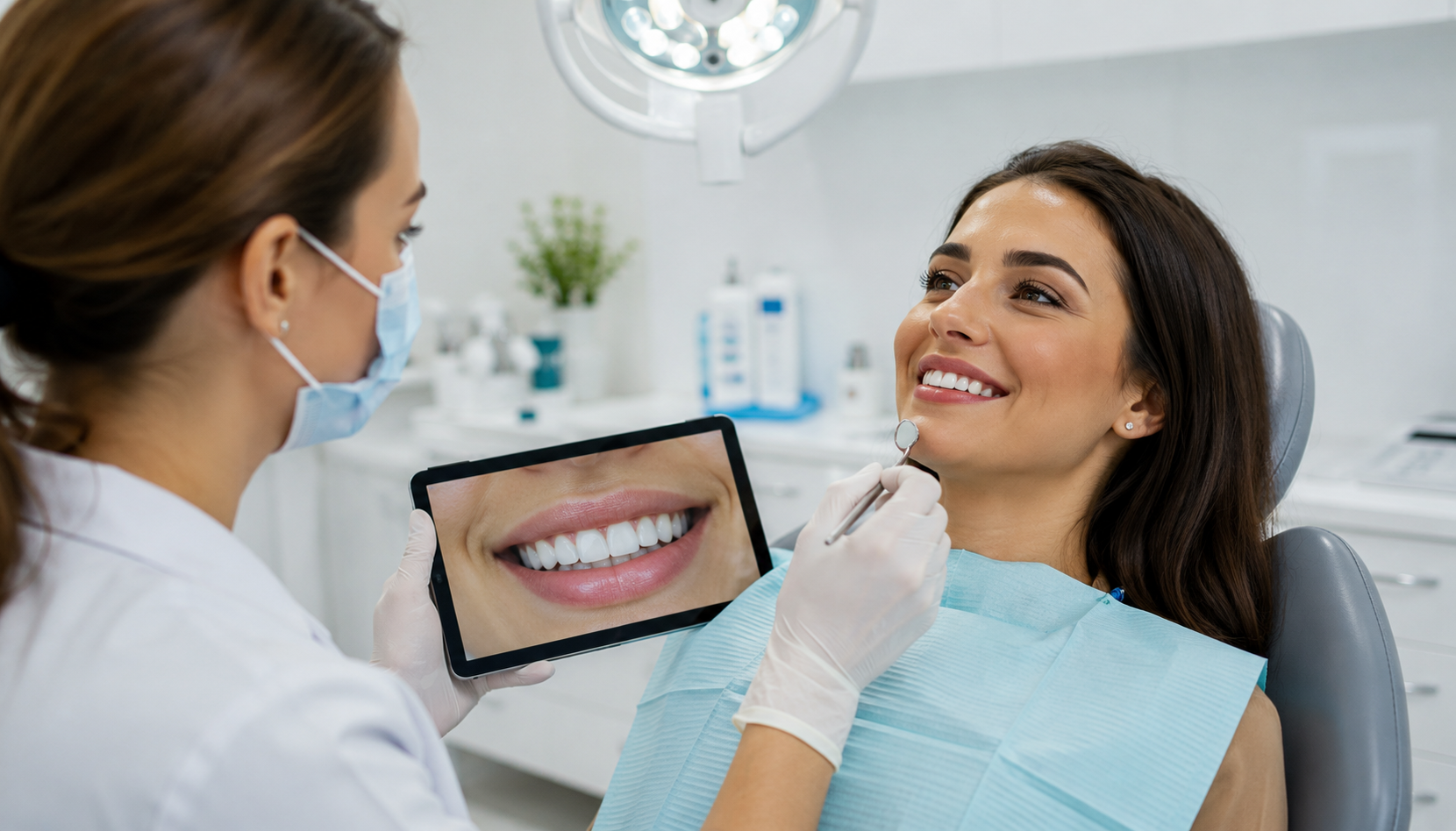
Teeth Whitening should begin with a review of current oral health, previous sensitivity, visible restorations and the kind of colour change the person hopes to achieve. Booking a professional Teeth Whitening Consultation allows these factors to be discussed before treatment begins. This distinction matters because a useful plan starts with the condition of the teeth and gums, not with a promise about a particular shade. Recording the starting point makes later discussion more objective and prevents ordinary lighting changes from being mistaken for treatment progress.
The starting shade can be documented in neutral conditions, while questions about recent dental work, discomfort and daily habits help shape an appropriate sequence. In day-to-day terms, the person should understand what will happen, how comfort will be checked and which changes might require the plan to pause. A calm sequence gives both the person and the practitioner clear points at which to review suitability.
A cosmetic wish does not override untreated decay, inflamed gums or unexplained sensitivity, and those concerns should be assessed before treatment. Good information also separates an expected temporary response from a sign that needs attention. That boundary helps people avoid either ignoring discomfort or worrying unnecessarily about a short-lived, manageable sensation.
The agreed plan should state what will be treated, how comfort will be monitored and what result would be considered proportionate. The most reliable decision is therefore one based on assessment, proportionate expectations and written aftercare. It should remain possible to adapt timing and intensity when the person’s oral health, sensitivity or lifestyle makes a standard approach unsuitable.
Teeth Whitening for young adults
Young adults may be motivated by photographs, social events, work or a simple wish to feel more comfortable with their smile, but age alone does not establish suitability. The practical value lies in consistency. The same lighting, shade guide and viewing conditions should be used when comparing the starting shade with the later appearance, because casual photographs and memory can exaggerate or hide small differences.
A clear conversation should distinguish natural tooth colour from surface staining and explain why a healthy, balanced appearance is a better objective than an unnaturally bright target. A responsible experience includes time for questions before anything is applied. People should know which teeth are expected to respond, why restorations behave differently and how the visible smile area may influence the final impression.
Developing teeth, active orthodontic treatment, untreated dental problems and unrealistic expectations may change whether treatment is appropriate or when it should happen. No single description can predict an individual outcome. Enamel thickness, underlying dentine, previous dental work, stain depth and daily habits all influence how the teeth look before and after Teeth Whitening.
The service should encourage steady oral hygiene and informed choices so that Teeth Whitening supports, rather than replaces, long-term care. Review should focus on a balanced, natural appearance and oral comfort rather than an arbitrary idea of maximum whiteness. A measured endpoint is easier to maintain and less likely to encourage unnecessary repeat treatment.
Support for tea and coffee drinkers
Tea and coffee contain pigments and tannins that can contribute to surface staining when teeth are exposed repeatedly over time. People concerned about these stains can learn more about Teeth Whitening for Tea and Coffee Drinkers, including the role of daily habits and realistic maintenance. This part of the process is most useful when it translates general information into a personal sequence. Dates, agreed priorities, baseline observations and aftercare notes create continuity if questions arise after the appointment.
Frequency, sipping patterns, additions to drinks and oral hygiene habits can matter as much as the total number of cups, so the discussion should look at the complete routine. Small practical choices can make a meaningful difference: allowing time rather than rushing, protecting the soft tissues, following the stated exposure period and avoiding improvised top-ups all support a more controlled experience.
Teeth Whitening can change tooth shade but cannot stop future staining while the same exposure continues, and aggressive brushing after acidic drinks may be unhelpful. Where uncertainty exists, the safer response is to pause and assess rather than continue automatically. Active decay, gum inflammation, unexplained pain or a change in the mouth deserves attention before cosmetic treatment proceeds.
Water, sensible timing, regular cleaning and moderation can make maintenance more practical without demanding an unrealistic lifestyle. Long-term satisfaction depends on what happens after the visible first result. Hygiene, professional cleaning where appropriate, moderation of staining exposure and realistic maintenance intervals all help preserve the appearance without turning care into an excessive routine.
A measured approach for sensitive teeth

Previous sensitivity deserves specific attention because the experience can vary from a brief response to discomfort linked with an underlying dental issue. This distinction matters because a useful plan begins with the condition of the teeth and gums, not with a promise about a particular shade. Recording the starting point makes later discussion more objective and prevents ordinary lighting changes from being mistaken for treatment progress.
A practitioner may consider shorter exposure, a staged approach, lower intensity or desensitising support according to the person’s assessment and the method being used. In day-to-day terms, the person should understand what will happen, how comfort will be checked and which changes might require the plan to pause. A calm sequence gives both the person and the practitioner clear points at which to review suitability.
Persistent, localised or unexplained pain should not simply be labelled as normal sensitivity, particularly where there may be recession, cracks, decay or failing restorations. Good information a lso separates an expected temporary response from a sign that needs attention. That boundary helps people avoid either ignoring discomfort or worrying unnecessarily about a short-lived, manageable sensation.
People should know in advance what sensation may be expected, how long it may last, what self-care is appropriate and when to seek review. The most reliable decision is therefore one based on assessment, proportionate expectations and written aftercare. It should remain possible to adapt timing and intensity when the person’s oral health, sensitivity or lifestyle makes a standard approach unsuitable.
Understanding different kinds of discolouration
Surface stains from food, drink or tobacco often behave differently from colour changes within the tooth or changes associated with age. The practical value lies in consistency. The same lighting, shade guide and viewing conditions should be used when comparing the starting shade with the later appearance, because casual photographs and memory can exaggerate or hide small differences.
Examining pattern, depth and distribution helps explain why one area may respond differently and why a uniform promise would be misleading. A responsible experience includes time for questions before anything is applied. People should know which teeth are expected to respond, why restorations behave differently and how the visible smile area may influence the final impression.
Trauma, medication-related discolouration, fluorosis and restorative materials may not respond in the same way as ordinary surface staining. No single description can predict an individual outcome. Enamel thickness, underlying dentine, previous dental work, stain depth and daily habits all influence how the teeth look before and after Teeth Whitening.
Where Teeth Whitening is unlikely to address the main concern, the person should be told clearly rather than being encouraged to expect a result the method cannot provide. Review should focus on a balanced, natural appearance and oral comfort rather than an arbitrary idea of maximum whiteness. A measured endpoint is easier to maintain and less likely to encourage unnecessary repeat treatment.
Preparing for a Teeth Whitening appointment

Preparation is mainly about arriving with an accurate history, realistic expectations and enough time for the visit to proceed without pressure. This part of the process is most useful when it translates general information into a personal sequence. Dates, agreed priorities, baseline observations and aftercare notes create continuity if questions arise after the appointment.
Relevant details include recent treatment, existing sensitivity, pregnancy or breastfeeding, allergies, current pain and any photographs or shade concerns the person wants to discuss. Small practical choices can make a meaningful difference: allowing time rather than rushing, protecting the soft tissues, following the stated exposure period and avoiding improvised top-ups all support a more controlled experience.
Trying new whitening products immediately before an assessment can confuse the baseline and may increase sensitivity. Where uncertainty exists, the safer response is to pause and assess rather than continue automatically. Active decay, gum inflammation, unexplained pain or a change in the mouth deserves attention before cosmetic treatment proceeds.
Normal oral hygiene should continue, but any special preparation should come from the practitioner responsible for the appointment rather than from improvised online advice. Long-term satisfaction depends on what happens after the visible first result. Hygiene, professional cleaning where appropriate, moderation of staining exposure and realistic maintenance intervals all help preserve the appearance without turning care into an excessive routine.
What a controlled session may include
A structured session commonly moves from baseline recording and soft-tissue protection to application, timed monitoring, removal and final review. This distinction matters because a useful plan begins with the condition of the teeth and gums, not with a promise about a particular shade. Recording the starting point makes later discussion more objective and prevents ordinary lighting changes from being mistaken for treatment progress.
Explaining each stage before it happens reduces uncertainty and allows the person to communicate discomfort promptly. In day-to-day terms, the person should understand what will happen, how comfort will be checked and which changes might require the plan to pause. A calm sequence gives both the person and the practitioner clear points at which to review suitability.
Treatment time alone does not prove quality; suitability checks, protection, accurate timing and responsible judgement are equally important. Good information also separates an expected temporary response from a sign that needs attention. That boundary helps people avoid either ignoring discomfort or worrying unnecessarily about a short-lived, manageable sensation.
If the response is uneven or comfort changes, the sequence should be adjusted instead of following a fixed schedule at all costs. The most reliable decision is therefore one based on assessment, proportionate expectations and written aftercare. It should remain possible to adapt timing and intensity when the person’s oral health, sensitivity or lifestyle makes a standard approach unsuitable.
Fillings, crowns and visible dental work
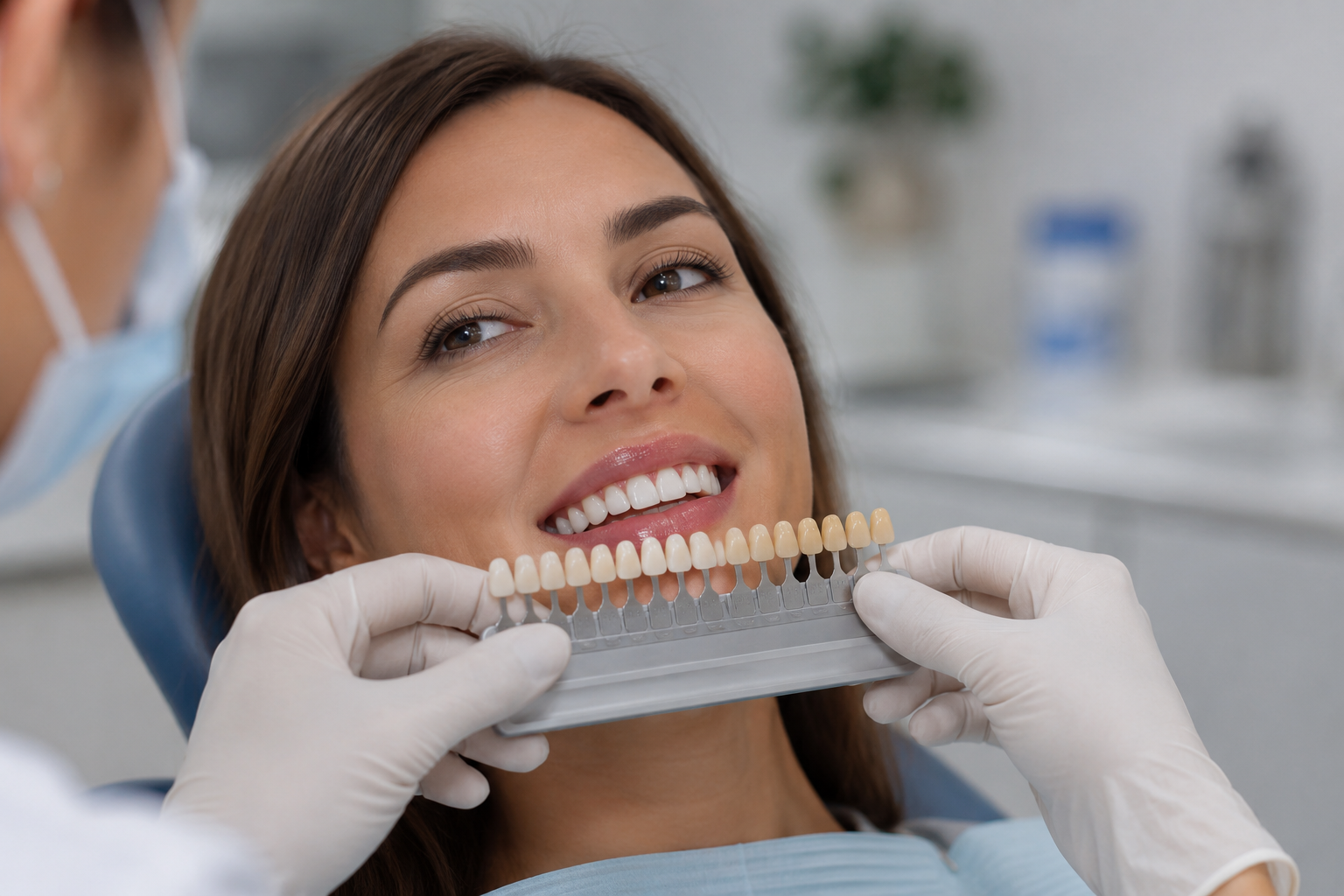
Existing fillings, crowns, veneers and bonding do not generally change shade in the same way as natural tooth tissue. The practical value lies in consistency. The same lighting, shade guide and viewing conditions should be used when comparing the starting shade with the later appearance, because casual photographs and memory can exaggerate or hide small differences.
Their position in the smile should be noted before treatment because a lighter natural tooth may make an older restoration look more obvious. A responsible experience includes time for questions before anything is applied. People should know which teeth are expected to respond, why restorations behave differently and how the visible smile area may influence the final impression.
Teeth Whitening cannot correct shape, alignment, chips or colour mismatch within a restoration. No single description can predict an individual outcome. Enamel thickness, underlying dentine, previous dental work, stain depth and daily habits all influence how the teeth look before and after Teeth Whitening.
Any discussion of replacing visible dental work should take place only after the shade has settled and should remain separate from pressure to undertake additional cosmetic treatment. Review should focus on a balanced, natural appearance and oral comfort rather than an arbitrary idea of maximum whiteness. A measured endpoint is easier to maintain and less likely to encourage unnecessary repeat treatment.
Comfort, communication and consent
Comfort is supported by clear consent, appropriate protection and a simple way for the person to signal that they need a pause. This part of the process is most useful when it translates general information into a personal sequence. Dates, agreed priorities, baseline observations and aftercare notes create continuity if questions arise after the appointment.
The practitioner should check understanding of the proposed method, expected sensations, reasonable alternatives and aftercare before beginning. Small practical choices can make a meaningful difference: allowing time rather than rushing, protecting the soft tissues, following the stated exposure period and avoiding improvised top-ups all support a more controlled experience.
Consent is an ongoing process and can be withdrawn; it is not a one-time signature that removes the need to respond to discomfort. Where uncertainty exists, the safer response is to pause and assess rather than continue automatically. Active decay, gum inflammation, unexplained pain or a change in the mouth deserves attention before cosmetic treatment proceeds.
A calm environment and unhurried explanation are important service features because they help people make decisions without pressure. Long-term satisfaction depends on what happens after the visible first result. Hygiene, professional cleaning where appropriate, moderation of staining exposure and realistic maintenance intervals all help preserve the appearance without turning care into an excessive routine.
Aftercare that fits ordinary life
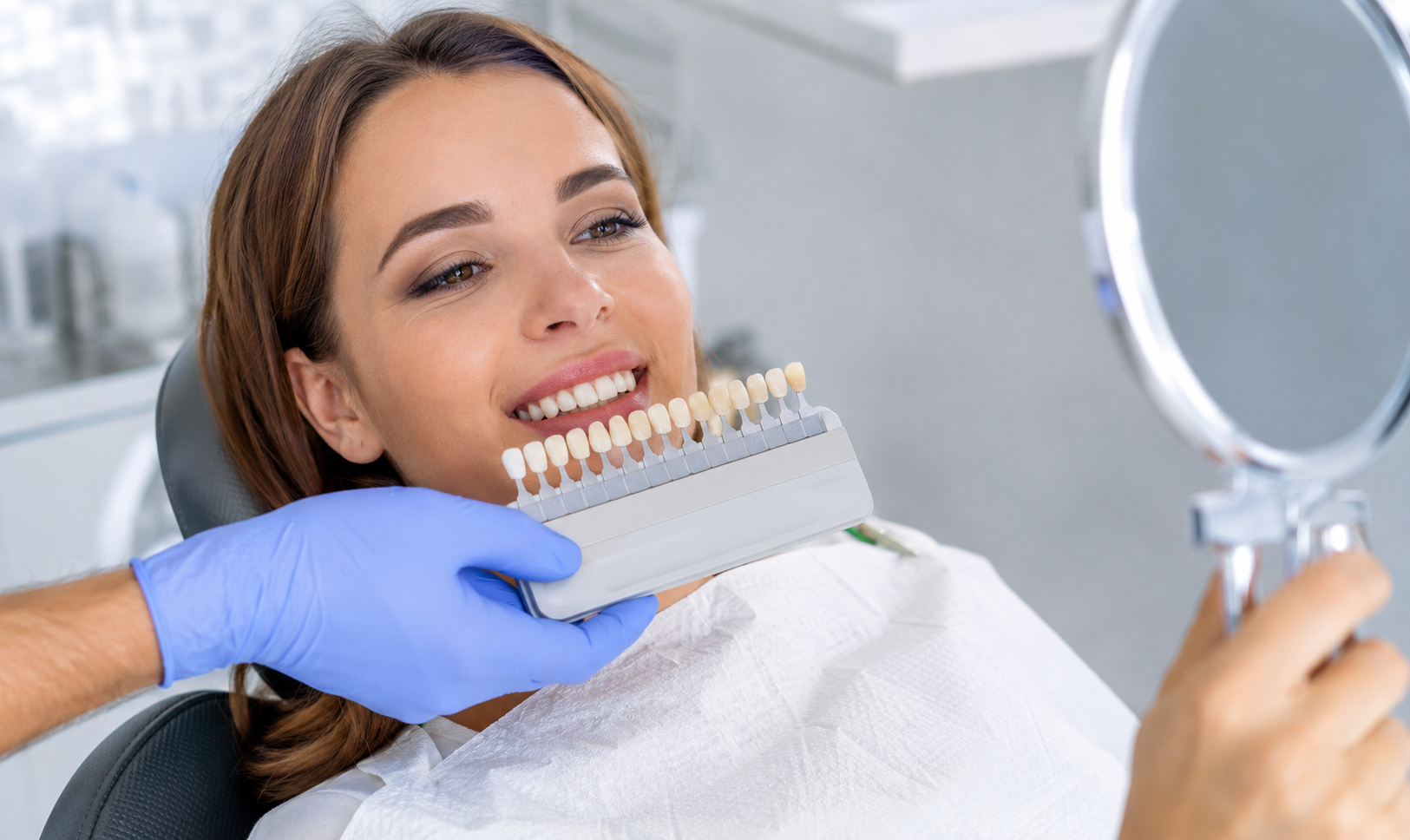
Aftercare should be specific enough to follow but realistic enough to fit meals, work, sleep and existing hygiene habits. Following appropriate Teeth Whitening Aftercare can help protect comfort and maintain the appearance of the result responsibly. The early period may include advice about strongly coloured food and drink, smoking, temperature sensitivity and gentle cleaning. A short written plan with clear review points is more useful than vague instructions to avoid everything that might cause staining.
The early period may include advice about strongly coloured food and drink, smoking, temperature sensitivity and gentle cleaning. In day-to-day terms, the person should understand what will happen, how comfort will be checked and which changes might require the plan to pause. A calm sequence gives both the person and the practitioner clear points at which to review suitability.
Extreme restrictions, harsh scrubbing or repeated unsupervised applications can create new problems without guaranteeing longer-lasting colour. Good information also separates an expected temporary response from a sign that needs attention. That boundary helps people avoid either ignoring discomfort or worrying unnecessarily about a short-lived, manageable sensation.
A short written plan with review points is more useful than vague instructions to avoid everything that might stain. The most reliable decision is therefore one based on assessment, proportionate expectations and written aftercare. It should remain possible to adapt timing and intensity when the person’s oral health, sensitivity or lifestyle makes a standard approach unsuitable.
Maintaining the result responsibly
The duration of a result varies with the starting shade, treatment response, enamel and dentine characteristics, hygiene and exposure to staining substances. The practical value lies in consistency. The same lighting, shade guide and viewing conditions should be used when comparing the starting shade with the later appearance, because casual photographs and memory can exaggerate or hide small differences.
Maintenance may involve ordinary cleaning, professional hygiene support where appropriate and occasional top-up treatment only when suitable. A responsible experience includes time for questions before anything is applied. People should know which teeth are expected to respond, why restorations behave differently and how the visible smile area may influence the final impression.
Frequent top-ups should not become an automatic response to small day-to-day colour changes or differences caused by lighting. No single description can predict an individual outcome. Enamel thickness, underlying dentine, previous dental work, stain depth and daily habits all influence how the teeth look before and after Teeth Whitening.
Comparing with the recorded baseline and waiting for the shade to stabilise supports more proportionate decisions. Review should focus on a balanced, natural appearance and oral comfort rather than an arbitrary idea of maximum whiteness. A measured endpoint is easier to maintain and less likely to encourage unnecessary repeat treatment.
What a responsible service should provide
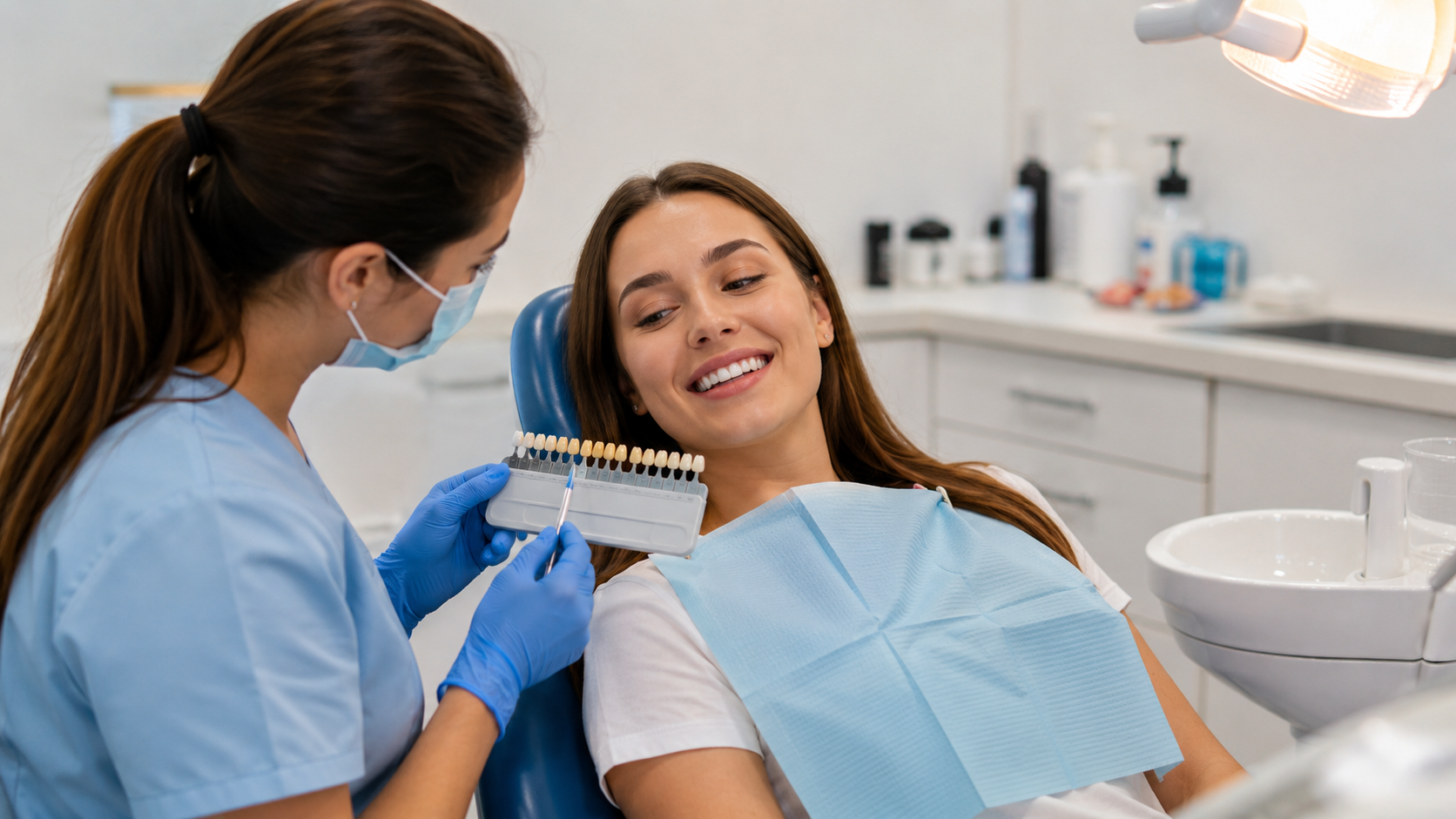
A responsible Teeth Whitening service should provide assessment, explanation, protection, monitoring, aftercare and honest limits in one connected experience. This part of the process is most useful when it translates general information into a personal sequence. Dates, agreed priorities, baseline observations and aftercare notes create continuity if questions arise after the appointment.
People should leave knowing what was done, what may happen next, how the result will be judged and how to raise a concern. Small practical choices can make a meaningful difference: allowing time rather than rushing, protecting the soft tissues, following the stated exposure period and avoiding improvised top-ups all support a more controlled experience.
Absolute guarantees about shade, comfort or duration are not compatible with individual biological variation. Where uncertainty exists, the safer response is to pause and assess rather than continue automatically. Active decay, gum inflammation, unexplained pain or a change in the mouth deserves attention before cosmetic treatment proceeds.
Trust is built through accurate records, consistent communication and willingness to recommend no treatment when that is the safer conclusion. Long-term satisfaction depends on what happens after the visible first result. Hygiene, professional cleaning where appropriate, moderation of staining exposure and realistic maintenance intervals all help preserve the appearance without turning care into an excessive routine.
How the service connects from first question to review
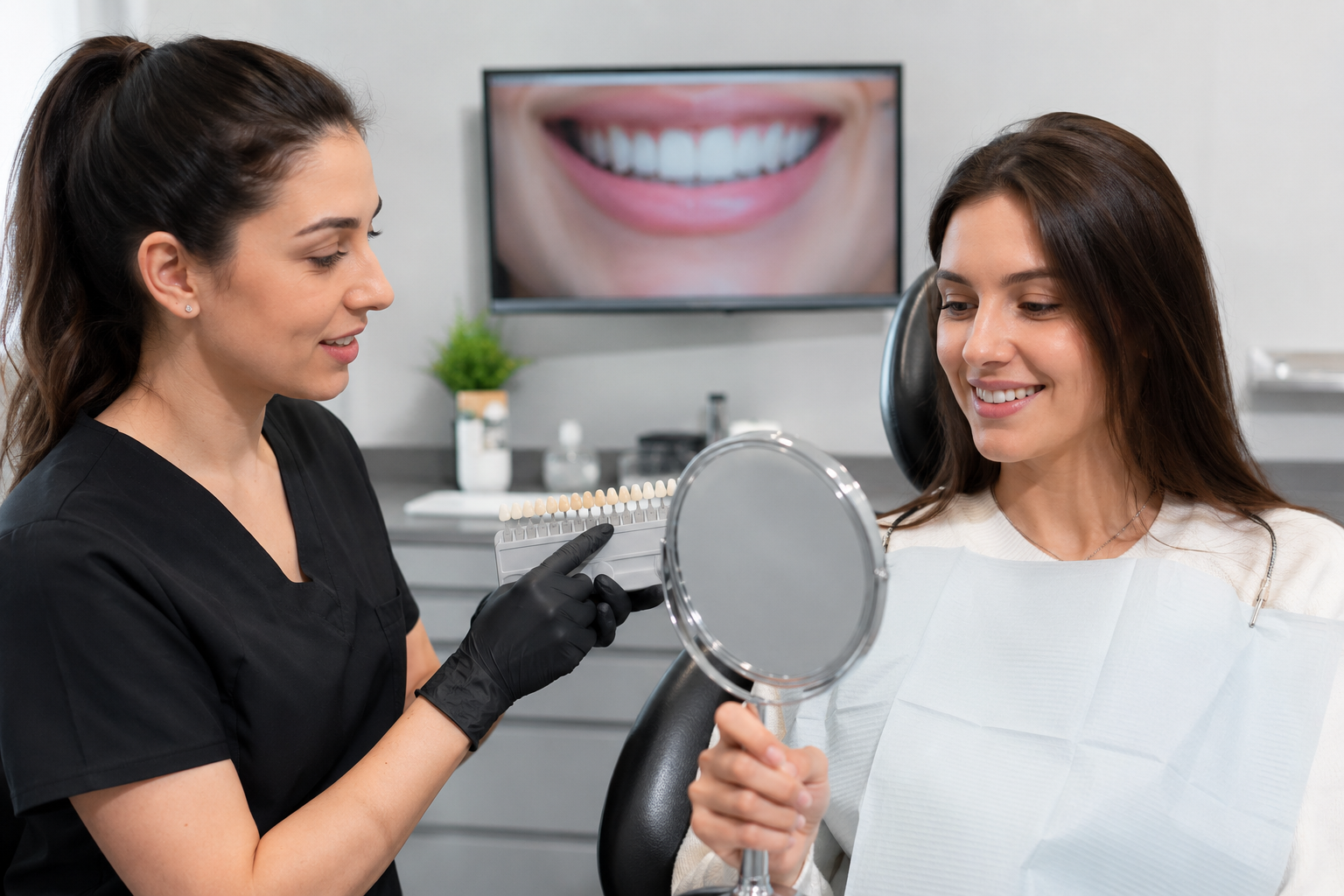
A complete Teeth Whitening service should feel connected rather than like a collection of unrelated steps. The first question establishes why the person is considering a change. The assessment checks whether the concern is mainly surface staining, a deeper colour pattern, natural variation or something that needs dental attention. The explanation then turns those findings into an understandable plan, including the likely treatment area, possible sensations, realistic limits and aftercare. Connecting the stages prevents important information from being lost between enquiry, treatment and maintenance.
For a young adult, the discussion may place greater emphasis on natural shade, developing expectations and the influence of photographs or social occasions. For someone who drinks tea or coffee throughout the day, the practical focus may be repeated exposure and how to reduce staining without demanding an unrealistic routine. For a person with sensitive teeth, comfort history, triggers and the difference between expected temporary sensitivity and unexplained pain become central. These are not separate versions of care; they are examples of how the same responsible framework adapts to the person.
Good communication continues during the active part of the appointment. The person should be able to ask for a pause, report a sharp or localised sensation and understand what is being checked. A practitioner should not rely only on the clock. Soft-tissue protection, gel placement, exposure and removal all require attention, while comfort and visible response may justify adjustment. A treatment that takes the advertised amount of time is not automatically a well-managed treatment unless those safeguards and decisions are present.
The final review should compare the result with the documented baseline under similar conditions. It should also note comfort, gum condition and any area that responded differently. Immediate brightness may settle as moisture returns to the teeth, so a balanced explanation is more helpful than treating the first mirror view as a permanent final shade. Written aftercare gives the person something reliable to follow once ordinary meals, work and social routines resume.
Maintenance should remain proportionate. Teeth naturally vary in colour from day to day because lighting, hydration and surrounding colours change how they appear. A small perceived difference does not automatically require another application. Reviewing the original shade record, allowing the colour to stabilise and considering recent staining exposure can prevent unnecessary treatment. The service is most sustainable when it supports normal hygiene and thoughtful habits rather than creating dependence on frequent cosmetic intervention.
Wellbeing disclaimer
Teeth Whitening is an elective cosmetic service and general information cannot determine individual suitability. Active pain, decay, gum problems, unexplained sensitivity or concerns about dental restorations should be assessed by an appropriately qualified dental professional before treatment. Results and comfort vary.
Common questions about Teeth Whitening
Is Teeth Whitening suitable for everyone?
No. Suitability depends on oral health, the cause of discolouration, sensitivity, age, expectations and existing dental work. Active decay, gum problems or unexplained pain should be assessed before treatment.
Can young adults have Teeth Whitening?
Suitability cannot be determined by age alone. Oral development, orthodontic treatment, dental health and expectations should all be considered through an individual assessment.
Does Teeth Whitening remove tea and coffee stains?
It may improve certain surface stains caused by tea and coffee, but results vary. Continued exposure can cause new staining, so sensible maintenance and good oral hygiene remain important.
Can people with sensitive teeth have Teeth Whitening?
Some people with sensitivity may still be suitable for a carefully adapted plan. Shorter exposure, staged treatment or desensitising support may be considered following an appropriate assessment.
Will crowns, fillings and veneers become whiter?
Generally, restorations such as crowns, fillings, veneers and bonding do not whiten like natural teeth. Their position and colour should be reviewed before treatment to identify possible shade differences.
What happens during a controlled Teeth Whitening session?
A session may include an oral-health review, baseline shade recording, soft-tissue protection, carefully timed application, comfort monitoring, product removal and a final assessment.
How should I prepare for my appointment?
Provide accurate information about sensitivity, recent dental treatment, existing discomfort, allergies, pregnancy or breastfeeding and any whitening products recently used. Avoid experimenting with new products immediately before the assessment.
Is sensitivity after Teeth Whitening normal?
Temporary sensitivity can occur, but persistent, severe, localised or unexplained pain should not automatically be considered normal. Treatment should be paused and professional advice sought if concerning symptoms develop.
How long do Teeth Whitening results last?
The duration varies according to the starting shade, treatment response, oral hygiene and exposure to staining substances such as tea, coffee and tobacco. No responsible service should guarantee a fixed duration.
How can I maintain the results responsibly?
Maintain normal oral hygiene, moderate exposure to staining substances and follow the written aftercare plan. Avoid harsh scrubbing, improvised applications or frequent top-ups without checking whether further treatment is appropriate.